I am not sure exactly. But there is an element of unsafely in being true to ourselves that is almost inexplicable. The only way to notice this fear is to sit in the silence for a while and watch how the nerve-wracking inner tension caused by the world starts easing away.
The more I put myself out there with my little creative treasures, the more scary it gets. Being refused or rejected is not a great feeling but tolerable. However, for me, being ridiculed for my most precious gifts is heart-breaking.
We all have these little pearls of great price within us, the unique attributes of our soul.
As children, each time we were told off for having drawn on the wallpaper or on the furniture, or when we were punished to be too energetic and running around the house, or when we put into detention for chatting during the class with a classmate who needed our support, we learn that we are not OK as we are.
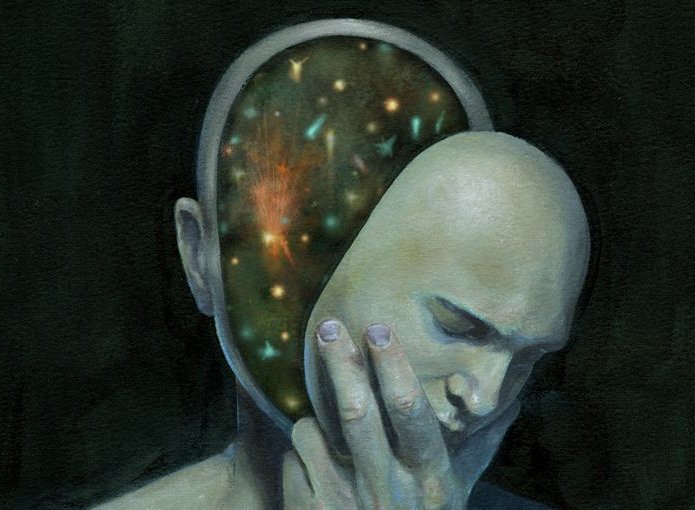
As a result of that, we start hiding our little precious treasures and start wearing a mask that reflects what the world around us wants to see us being. With that inner betrayal, we loose contact with ourselves and turn to the world for satisfaction and love.
When we take the courage to start turning within, first we must confront the pain of treachery. Not easy. Sometimes it takes years of forgiveness to release the pain caused by our disloyalty. And it is still not the end of the road.
As soon as, we regain our sense of true self, a trust issue starts emerging with an immense sense of fear saying ‘what if it happens again? What if you betray me again? How can I trust you again?’ Will you now stay by my values and needs or will you sell out again?’
This is the second leg of the journey, walking though the fires of fear.
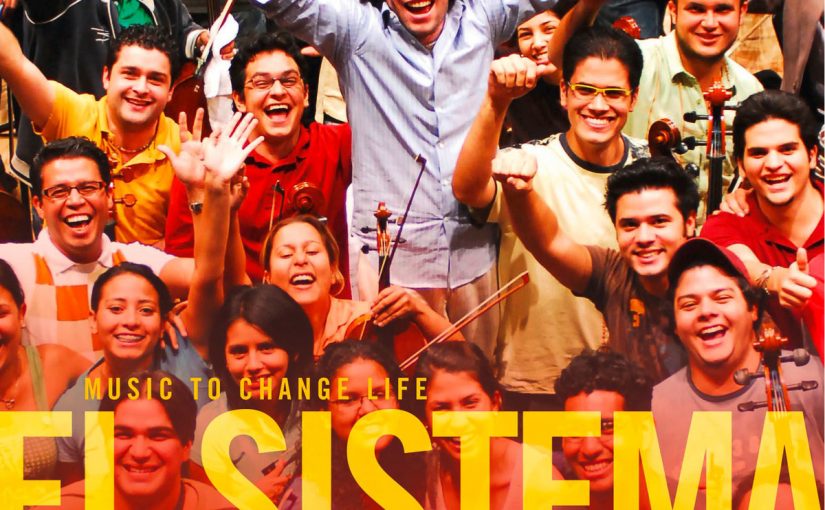
Jose Antonio Abreu is the charismatic founder of a youth orchestra system that has transformed thousands of kids’ lives in Venezuela. Here he shares his amazing story and unveils a TED Prize wish that could have a big impact in the US and beyond.
Watch this video to learn more about the program
Jose Antonio Abreu Maestro
Jose Antonio Abreu founded El Sistema (“the system”) in 1975 to help poor Venezuelan kids learn to play a musical instrument and be part of an orchestra. 30 years on, El Sistema has seeded 102 youth orchestras — and many happy lives.
Betty Edwards has used the terms L-Mode and R-Mode to designate two ways of knowing and seeing – the verbal, analytic mode and the visual, perceptual mode – no matter where they are located in the individual brain. You are probably aware of these different characteristics. L-mode is a step-by-step style of thinking, using words, numbers and other symbols. L-mode strings things out in sequences, like words in a sentence. R-mode on the other hand, uses visual information and processes, not step-by-step, but all at once, like recognizing the face of a friend.
“You have two brains: a left and a right. Modern brain scientists now know that your left brain is your verbal and rational brain; it thinks serially and reduces its thoughts to numbers, letters and words… Your right brain is your non-verbal and intuitive brain; it thinks in patterns, or pictures, composed of ‘whole things,’ and does not comprehend reductions, either numbers, letters, or words.” From The Fabric of Mind, by the eminent scientist and neurosurgeon, Richard Bergland. Viking Penguin, Inc., New York 1985. pg.1
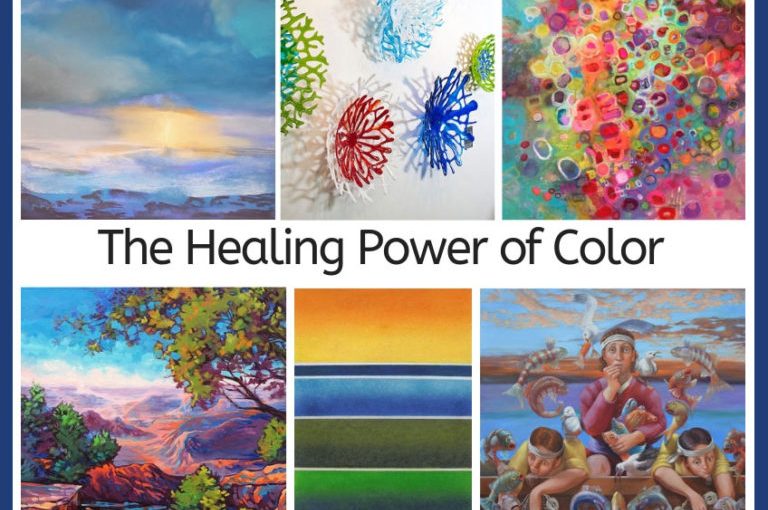
The writer of this article – please find link below – have spent countless hours researching the topic of ‘the healing powers of colours’. I chose a few bits, my favourite ones, to share here with you.
Wassilly Kandinsky, Blue Mountain, oil, 76-3/8″ x 51″. Solomon R. Guggenheim Museum, New York, NY.
Chromotherapy – Healing with Color
Several ancient cultures, including the Egyptians and Chinese, practiced chromotherapy — using colors to heal. Chromotherapy is sometimes referred to as light therapy or colourology and is still used today as a holistic or alternative treatment.
Little Known Facts About Color
The first known theory of color was developed by Aristotle who believed it was sent by God from heaven through celestial rays of light. He suggested that all colors came from white and black and related them to the four elements – water, air, earth, and fire. Surprisingly his beliefs on color were widely held for over 2,000 years until replaced by those of Newton.
It has been said that Leonardo da Vinci preferred to meditate in a lavender or purple-colored light.
Some 75 percent of small children choose purple over other colors.
Depending on our cultural background the significance of colors may vary significantly. While the color white is used in many Western countries to represent purity and innocence, it is seen as a symbol of mourning in many Eastern countries. In the 1980’s, scientists found that painting jail cells with a Pepto-Bismol-like hue calmed aggressive inmates. The shade became known as “Drunk Tank Pink.”
To get the best color displayed on your LCD monitor, make sure to set it to 32-bit color. This measurement refers to color depth, which is the number of color values that can be assigned to a single pixel in an image. Color depth can range from 1 bit (black-and-white) to 32 bits (over 16.7 million colors).
In this podcast I talk about how a genius, someone with a higher level of awareness, can make a positive difference in the life of those around him. (Read some information on the circumstance of this performance below.)
It sees Prince joining an all-star version of the Beatles’ While My Guitar Gently Weeps, backed by Tom Petty, Steve Winwood and George Harrison’s son, Dhani. He keeps to the sidelines until the final two minutes, when he steps forward to deliver one of the most breathtaking guitar solos you’ve ever seen, full of fluttering high notes and ringing harmonics.
Amazingly, Prince never rehearsed this moment with the band. At a run-through the night before it was Jeff Lynne’s guitarist, Marc Mann, who took the solo.
“Prince doesn’t say anything, just starts strumming, plays a few leads here and there, but for the most part, nothing memorable,” recalled Joel Gallen, who directed the ceremony.
But when the big moment came, Prince stole the show. At one point, he turned to face Petty and Harrison, then fell backwards into the audience – while still playing – before strutting off stage, throwing his guitar into the air before the song ended.
“You see me nodding at him, to say, ‘Go on, go on,'” Petty told the New York Times. “I remember I leaned out at him at one point and gave him a ‘This is going great!’ kind of look.
“He just burned it up. You could feel the electricity of ‘something really big’s going down here.'”
Prince later claimed he had never even heard the song before it was sent to him to learn for the performance.
Cikk, a Nőklapja Psychologia Augusztusi számában talállható
Hosszú évek óta nem élek Magyarországon. Amikor látogatóba jövök megfigyeléseket teszek, nézem a változásokat, olvasom az ujságokat, hogy minél informáltabb legyek.
Örömmel olvastam Krafiáth Orsolya irását, a Nőklapja Pszichológiában, Szabó Győző és Csernus Imre kooperációjáról, ami most film ormában is a nagyközönség elé kerül, Győző 2o12-es könyve után.
A fenti sorok igazán megragadtak, mert nagyon fontosnak tartom, hogy ez a társadalolom elkezdjen őszintén beszélni. Nem állitom, hogy más társadalmakban nem hazudnak magunkak és másoknak az emberek. De állitom, hogy a Magyar társadalomban az önámitás népbetegség.
Az a megfigyelésem, hogy szinte mindenki hazudik magának (és másoknak) az életének valamely aspektusában. Bár vannak úgynevezett ártatlan hazugságok, de az ember, aki ezeket hazudja tisztában kell legyen azzal, hogy hazudik. De ez a kultúra ámit! Azért ámit, mert nem mer őszinte lenni: vagy azért nem, mert túl fáj látni a valóságot, az ember tehetetlenségét, vagy azért, mert az önmagunkról fentartott kép megbukna az első igaz szónál.
Én ebben a hazugság szövevényben nőttem fel, a sűrűjében, amikor még az, aki igazat mondott az életével játszott. De azok az idők már elmúltak. Már nem kényszer a hazugság, hanem választás.
A legszomorúbb mégis az, hogy támadunk és gyűlölünk mindenkit, aki őszinteségre késztet bennünket. Ahogy azt Cernus is teszi. Tisztelem a bátorságáért.
Öszinteség nélkül, ahogy Csernus is mondja, az élet elszáll anélkül, hogy élnénk. Egész életünke a hazugságok és önámitásk oltárán áldozzuk fel. Önismeretet az ember csak az öszinteség mezsgyéJén tudja elérni, még akkor is, ha fáj! A fájdalom csak pillanatnyi, addig tart mig lehull az álca. A megkönnyebülés és felszabadulás boldogság fröccse mindenért kárpótol.
Ha további információkat szeretnél az általam tartott önismeret szerzést támogató művéseti programokról, itt (CLICK) találhatsz. A honlapom angol nyelvű, de szivesen adok magyarnyelvű információt. Az alábbi emailcimre irj. Köszönöm.
A alábbi cikk részleteket a Nőklapjaa Pszichologia-ban találtam. A cikk irója stresszoldó légzés-tecnika oktató. Kipróbáltam, tényleg jó! )
Én azonban, művészeti önkifejezé stresszoldó és boldogság-érzet erősitő hatásáról szeretnék irni. De lássuk először, hogy Dr. Pavlovich mit ír.
Kisgyerek korom óta rajzolok es festegetek, de volt egy hozzú időszak az életemben, amikor egyáltalán nem rajzoltam. Ez volt eddigi életem legdepressziósabb és legstresszesebb időszaka.25 eves lehettem, amikor elkezdtem ismét visszatalálni a rajzolásoz.
Sokan, azért rajzolnak, hogy szép művészeti alkotásokat hozzanak létre. Gyakorolnak, órákat vesznek, és rakásra készitik a képeket. Ez szép dolog, azonban az önmagunk felé támasztott elvárások gyarkan több stresszt generálnak, mint amennyi örömöt lelünk a rajzolásban és festésben.
Amikor rajzolok én nem arra figyelek, hogy milyen szépre sikerül a rajzom, és vajon másnak tetszeni fog-e majd, hanem arrra, hogy a rajzolás közben ellazuljak, és egy gyermeki mentalitást felvéve, feltétel nélkül élvezzem, amit csinálok.
A készítés élvezete, a rajzolás monotonitása, a kellemes zene, a színek varázslata ellazít, kikapcsol, egy játékos világba repít. Szinte medítativ állapot ez, ahol nincsenek gondok, se szorongás, se szomorúság. Csak nyugalom és önfeled öröm van, mert az ember teljesen jelen van a művészet egész testet és lelket átjáró játékos folyamában.
Ha további információkat szeretnél az általam tartott rajz programokról, itt találhatsz (click) . A honlapom angol nyelvű, de szivesen adok magyarnyelvű információt. Az alábbi emailcimre irj. Köszönöm.
– The significance of the famous ‘love chapter’, ICorinthians 13-
ICorinthians 13 beautifully talks about the human journey into Love or Oneness; starting from the beginnings when one is lost in the world, through learning and practice, arriving to enlightenment where one sees ‘in parts’ no more but sees eternity.
13 If I speak in the tongues of men or of angels, but do not have love, I am only a resounding gong or a clanging cymbal. 2 If I have the gift of prophecy and can fathom all mysteries and all knowledge, and if I have a faith that can move mountains, but do not have love, I am nothing. 3 If I give all I possess to the poor and give over my body to hardship that I may boast,[b] but do not have love, I gain nothing. 4 Love is patient, love is kind. It does not envy, it does not boast, it is not proud. 5 It does not dishonor others, it is not self-seeking, it is not easily angered, it keeps no record of wrongs. 6 Love does not delight in evil but rejoices with the truth. 7 It always protects, always trusts, always hopes, always perseveres. 8 Love never fails. But where there are prophecies, they will cease; where there are tongues, they will be stilled; where there is knowledge, it will pass away. 9 For we know in part and we prophesy in part, 10 but when completeness comes, what is in part disappears. 11 When I was a child, I talked like a child, I thought like a child, I reasoned like a child. When I became a man, I put the ways of childhood behind me. 12 For now we see only a reflection as in a mirror; then we shall see face to face. Now I know in part; then I shall know fully, even as I am fully known. 13 And now these three remain: faith, hope and love. But the greatest of these is love.
If I speak in the tongues of men or of angels, but do not have love, I am only a resounding gong or a clanging cymbal. 2 If I have the gift of prophecy and can fathom all mysteries and all knowledge, and if I have a faith that can move mountains, but do not have love, I am nothing. 3 If I give all I possess to the poor and give over my body to hardship that I may boast,[b] but do not have love, I gain nothing.
This passage talks about the very beginning of the journey when we only know the world. Our words and actions are empty because it has no aware consciousness just yet. It describes how our efforts are in vain until our thoughts and actions come from a place of Oneness.
The second passage gives meaning to LOVE and explains what it and how it is different from the ‘empty’ words and actions described in the previous passage. “Love is patient, love is kind. It does not envy, it does not boast, it is not proud. 5 It does not dishonor others, it is not self-seeking, it is not easily angered, it keeps no record of wrongs. 6 Love does not delight in evil but rejoices with the truth. 7 It always protects, always trusts, always hopes, always perseveres.”. Therefore, LOVE is Oneness with all and embracing it all without fail. To be in LOVE means to be centred in Divine Presence and following Divine Guidance in all matters. It is being a living example of the Truth.
In the third passage he talks about the final step, the arrival of our evolutionary journey in Spirit. 11 When I was a child, I talked like a child, I thought like a child, I reasoned like a child. When I became a man, I put the ways of childhood behind me. As we grow in Spirit we leave behind the limitations of our childhood, the way we were brought up, the conditioning. It also means that when we start on our inner journey our understanding of Spirit is limited.
8 Love never fails. But where there are prophecies, they will cease; where there are tongues, they will be stilled; where there is knowledge, it will pass away. 9 For we know in part and we prophesy in part, 10 but when completeness comes, what is in part disappears. As we walk the inner journey, we let go of our misconceptions, partial knowledge and beliefs that do not serve the Truth. At the end, all that “is in part disappears” and we are centered in LOVE.
12 For now we see only a reflection as in a mirror; then we shall see face to face. Now I know in part; then I shall know fully, even as I am fully known. In Divine Presence, in Truth I am faced with my own eternity, and I can see myself and know myself fully in God as God.
We use cookies on our website to give you the most relevant experience by remembering your preferences and repeat visits. By clicking “Accept All”, you consent to the use of ALL the cookies. However, you may visit "Cookie Settings" to provide a controlled consent.
This website uses cookies to improve your experience while you navigate through the website. Out of these, the cookies that are categorized as necessary are stored on your browser as they are essential for the working of basic functionalities of the website. We also use third-party cookies that help us analyze and understand how you use this website. These cookies will be stored in your browser only with your consent. You also have the option to opt-out of these cookies. But opting out of some of these cookies may affect your browsing experience.
Necessary cookies are absolutely essential for the website to function properly. These cookies ensure basic functionalities and security features of the website, anonymously.
Cookie
Duration
Description
cookielawinfo-checkbox-analytics
11 months
This cookie is set by GDPR Cookie Consent plugin. The cookie is used to store the user consent for the cookies in the category "Analytics".
cookielawinfo-checkbox-functional
11 months
The cookie is set by GDPR cookie consent to record the user consent for the cookies in the category "Functional".
cookielawinfo-checkbox-necessary
11 months
This cookie is set by GDPR Cookie Consent plugin. The cookies is used to store the user consent for the cookies in the category "Necessary".
cookielawinfo-checkbox-others
11 months
This cookie is set by GDPR Cookie Consent plugin. The cookie is used to store the user consent for the cookies in the category "Other.
cookielawinfo-checkbox-performance
11 months
This cookie is set by GDPR Cookie Consent plugin. The cookie is used to store the user consent for the cookies in the category "Performance".
viewed_cookie_policy
11 months
The cookie is set by the GDPR Cookie Consent plugin and is used to store whether or not user has consented to the use of cookies. It does not store any personal data.
Functional cookies help to perform certain functionalities like sharing the content of the website on social media platforms, collect feedbacks, and other third-party features.
Performance cookies are used to understand and analyze the key performance indexes of the website which helps in delivering a better user experience for the visitors.
Analytical cookies are used to understand how visitors interact with the website. These cookies help provide information on metrics the number of visitors, bounce rate, traffic source, etc.
Advertisement cookies are used to provide visitors with relevant ads and marketing campaigns. These cookies track visitors across websites and collect information to provide customized ads.